
Charting the frontier of cell therapy | the innovative practice and vision of leading oncologist professor Shen Lin
Author: Zhu Ping
Professor Shen Lin of Peking University Cancer Hospital stands at the vanguard of China's pharmaceutical sector, combining scientific expertise with clinical insight to redefine the industry. Having witnessed China's transition from an innovation follower to a global peer, she uses her strategic vision to facilitate the global launch of original, Chinese-developed therapies for gastrointestinal tumors.
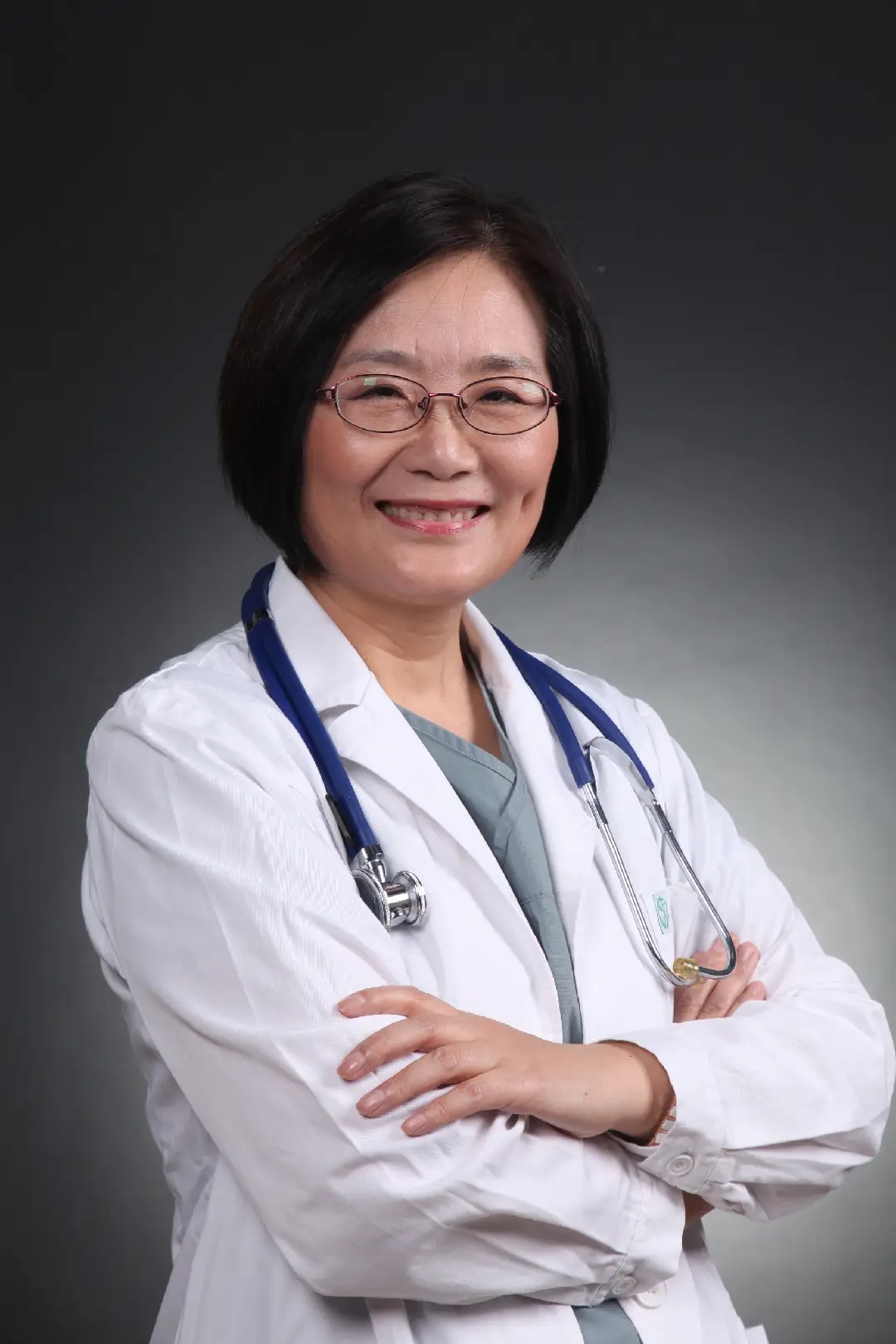
Professor Shen Lin
Her influence extends far beyond individual patient care; she is actively constructing the national innovation ecosystem. Professor Shen emphasizes the need for "full-process empowerment"—a comprehensive support system spanning from the laboratory to the bedside. Her philosophy centers on closing the loop between scientific, clinical, and market value, requiring rigorous alignment between policy, industry, and clinical sectors.
From developing the world's first solid tumor CAR-T therapy to designing treatment regimens that have transformed international practice, Professor Shen has demonstrated that Chinese researchers have evolved from "executors" into "rule-definers." Driven by the core tenet that "innovation must be grounded," she is steering China's medical innovation from quantitative growth to qualitative leadership, ensuring laboratory breakthroughs translate into tangible patient benefits.
01. Audacious Innovation
China's pharmaceutical sector is currently experiencing a dynamic surge, particularly in frontier fields like cell and immune therapy, where homegrown innovations are taking center stage. Professor Shen Lin characterizes this as a pivotal transition period—shifting from "following" to "running in parallel," and in select areas, striving to "lead the field."
"Our nation's support for early-stage innovation is unprecedented, providing fertile soil for original ideas," she notes. "However, a great innovation cannot remain confined to academic papers and laboratories. Its ultimate value is defined by its translation—whether it reaches patients and delivers a cure."
Professor Shen believes that choosing the right direction for innovation requires "audacious" decision-making. As the principal investigator for the world's first clinical trial of CAR-T therapy targeting Claudin 18.2 in solid tumors, she intimately understands the triumphs and hardships of translational medicine.
Reflecting on the project's genesis, she jokes that it began when she was "just wandering around" the 2017 International Gastric Cancer Congress. She bumped into Dr. Li Zonghai, and they hit it off immediately. "I suppose I was quite bold," she reflects.
In reality, this was not a moment of impulsive daring, but a strategic move underpinned by her mastery of digestive oncology and a rigorous evaluation of the target's characteristics. She points out that Claudin 18.2 is highly tissue-specific; in normal tissue, it is expressed only in the gastric mucosa, sparing other organs. Crucially, Professor Shen offered a unique clinical insight: the gastric mucosa possesses powerful self-renewal capabilities. This creates a physiological "buffer mechanism" to withstand potential off-target toxicity from CAR-T therapy—a safety net provided by nature.
Spanning nearly a decade since that 2017 meeting, the project has moved through rigorous systematic R&D. The data is compelling: among 98 patients treated with solid tumors, the Overall Objective Response Rate (ORR) exceeded 40%, while the gastric cancer subgroup approached 60%. These unprecedented results represent a breakthrough in late-stage gastric cancer treatment. Notably, concurrent studies in the United States have yielded highly consistent results, further validating the approach's scientific reliability.
In a discussion with Artery Network, Professor Shen revealed that the team gained critical experience from the very first patient, who suffered from an anastomotic recurrence. Although the patient experienced adverse reactions, the team successfully managed them, proving the therapy's potent anti-tumor activity while highlighting the need for careful anatomical selection. Consequently, her team established a new set of screening standards to balance safety with efficacy.
Today, this project serves as a global benchmark. As the world's first clinical study of CAR-T therapy targeting Claudin 18.2, its findings have been published in The Lancet, presented at ASCO, and featured in Nature reviews—signaling that China has reached an international leading level in solid tumor cell therapy.
02. Building a Systemic Ecosystem
Professor Shen Lin compares the journey of an innovative drug to a relay race. It is not a solo sprint; it requires what she calls "full-chain support" and "end-to-end management." The critical "last mile" of innovation—transforming a lab discovery into a patient cure—involves a complex web of translation, clinical development, regulatory review, and reimbursement.
While the Claudin 18.2 CAR-T therapy is a classic example of medical insight meeting engineering capability, moving forward requires an ecosystem that evolves alongside the science. When entirely new treatment paradigms emerge, global regulators face a difficult question: How do we evaluate something that has never existed before?
In recent discussions, industry experts highlighted several hurdles and potential solutions to optimize this ecosystem:
Need for Speed: For breakthrough therapies showing immense potential in early data, experts urge the adoption of "Conditional Approval" mechanisms. This allows patients with life-threatening conditions to access treatments earlier, with full verification coming through strict post-market surveillance.
Scientific Regulation: Some experts observe that the current review system is hindered by "excessive caution" and "policy lag," particularly for First-in-Human trials. To counter this, they advocate for "Scientific Regulation"—a framework that manages risk without stifling progress.
Rethinking Accountability: A major driver of regulatory caution is the pressure of "lifetime accountability." Experts argue that science is dynamic; it is unreasonable to judge past decisions by today’s standards. The industry calls for "collective decision-making mechanisms" to protect reviewers, ensuring they feel safe enough to approve groundbreaking work.
Sustainable Payment Models: Finally, for disruptive therapies with high price tags, relying solely on basic state insurance is unsustainable. There is a strong consensus on the need for a multi-layered insurance system, including robust commercial health insurance.
In essence, true innovation demands a new level of trust and synergy between the three pillars of the industry: the regulators, the biotech companies, and the clinical researchers.
03. Leading Clinical Research: The Evolution of a Role
Professor Shen Lin's career trajectory delineates the evolution of China's top clinical researchers: transforming from participants in international multi-center trials to "Leading PIs" capable of steering studies that reshape global practice. This marks a definitive evolution from "Executor" to "Architect."
"In the past, we mostly participated in global studies initiated by multinational pharma. Our mandate was strict adherence to protocols," Professor Shen admits. "That experience was pivotal, laying the foundation for clinical research standards aligned with international norms."
However, she believes the value of Chinese researchers extends far beyond execution. "We possess one of the world's largest patient populations and hold the deepest understanding of tumors with high incidence in China, such as gastric and liver cancers. This provides unique soil for source innovation."
Professor Shen cites the Claudin 18.2 CAR-T study to illustrate "innovation designed around clinical needs." Facing a drug class already mature in late-line treatment, she avoided the "Red Ocean" of crowded competition. Instead, she keenly identified the "perioperative setting" as a massive unmet need.
"We persuaded the enterprise to boldly explore a novel, high-risk treatment model—even proposing a 'chemo-free' concept—using a drug that appeared 'mature'," she explains. The study’s positive results prompted replication by peers in Japan and South Korea. "This proves that Chinese researchers are fully capable of formulating critical scientific questions and contributing 'Chinese wisdom' to global oncology guidelines."
Nevertheless, leading such pioneering research demands exceptional standards. Professor Shen emphasizes that Multidisciplinary Collaboration (MDT) is the lifeline. "Frontier fields like cell therapy are not a solo endeavor. We need Hematology to manage cytokine storms (CRS), ICU for life support, and precise assessments from Surgery, Radiology, and Pathology. It is a massive systematic engineering project."
To replicate this success, Professor Shen has invested heavily in talent development. She established a rigorous training system, requiring young doctors to undergo systematic training before conducting high-risk therapies. "I must ensure they deeply understand risk management and ethical norms. This is a responsibility to the patients and to the innovation ecosystem itself."
04. High-Quality Data: The Cornerstone of Global Trust
In today's integrated global pharmaceutical landscape, international recognition of China's clinical research serves as a critical yardstick for measuring its innovation value. Professor Shen Lin outlines the pathway for Chinese research to earn global trust through two key dimensions: data integrity and international collaboration.
"Data quality is the lifeline of clinical research and the cornerstone of trust," Professor Shen emphasizes. Leveraging decades of experience since the 1990s, her center has established a rigorous quality control system. "This expertise cannot be achieved overnight. It is reflected in the rigorous entry of every Case Report Form (CRF), the precision of every imaging assessment, and the standardized management of the entire research lifecycle."
She asserts that ensuring data is authentic, reliable, and traceable is a prerequisite for Chinese innovative drugs to "go global." regarding data sharing, she adopts an open yet rational approach: "Provided we comply with national security and ethical regulations, international exchange of high-quality data is an inevitable trend."
Consequently, Professor Shen's collaborations with overseas biotech firms are increasing. Her criteria for partnership go beyond scientific merit; she prioritizes partners willing to drive localization. "I insist that collaborative cell therapy products must be manufactured in China," she states. "This is not merely a cost consideration; it is to guarantee supply chain security, ensure stable access for Chinese patients, and upgrade local industrial capabilities."
Looking ahead, Professor Shen expresses confidence in the future, noting that competitiveness will hinge on "system optimization" and "value creation."
"A physician's mission begins with each patient in the ward, but it must not end there," Professor Shen concludes. "Transforming effective innovative therapies into standard-of-care solutions through rigorous clinical research—and driving progress in oncology treatment for China and the world—is the historical responsibility borne by our generation of clinical scientists."