
Levinthal Biotech secures tens of millions in Pre-A funding, with its all-atom model Pallatom making NVIDIA's recommended list
Levinthal Biotech, a leading enterprise in the field of AI-driven protein design, announced the successful completion of a Pre-A round financing worth tens of millions. This round was led by Jolmo, with joint investment from Junke DanMu, and exclusive financial advisory provided by ARK Capital.
The raised funds will primarily be allocated to accelerate the technological iteration of its all-atom model protein design platform, Pallatom, expand its commercial product pipeline, and facilitate the recruitment of global talent. Notably, Pallatom is the world's first platform to successfully address the design challenges of mixed-chirality cyclic peptides, thereby pioneering new pathways for the development of next-generation cyclic peptide therapeutics.
Levinthal Biotech was established in September 2021 as a technology-driven company specializing in AI algorithm-powered protein design. The company's name, "Levinthal Biotech," pays tribute to the pioneer of molecular biology, Cyrus Levinthal, who proposed the renowned "Levinthal's Paradox": if a protein were to search for its correct structure through random trial and error, the time required would far exceed the age of the universe; in reality, however, proteins can fold within milliseconds.
This paradox has inspired countless scientists to explore the rational design principles underlying life. By adopting this name, Levinthal Biotech expresses its commitment to leveraging AI-driven rational and precise design to address the most fundamental and challenging problems in life sciences.
Dr. Wang Haobo, the founder of Levinthal Biotech, has deep-rooted connections with Nobel Prize-winning teams. During his time at Harvard University, he was extensively involved in cutting-edge AI protein design research led by pioneering Nobel laureate teams. After establishing Levinthal Biotech in China in 2021, he assembled a team of research and industry experts from prestigious Chinese and international institutions such as Peking University, Harvard University, and the Chinese Academy of Sciences. The team is dedicated to exploring the co-evolutionary patterns of proteins and advancing the closed-loop research paradigm of "AI algorithms + wet-lab validation," thereby unlocking broader applications for proteins in production and daily life.
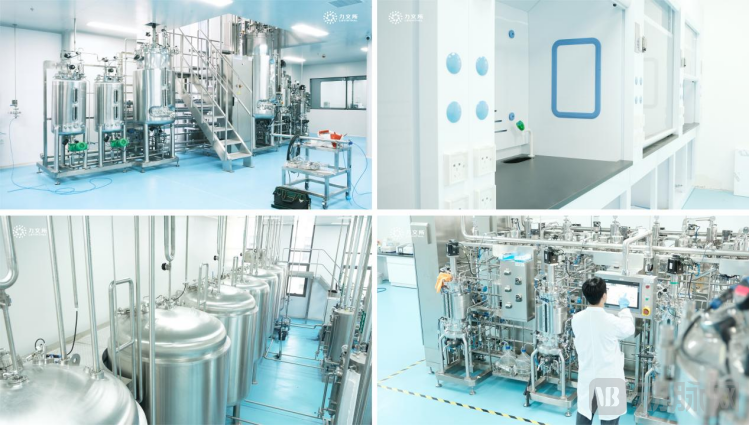
Figure 1. Levinthal Intelligent Pilot Workshop
Proteins are the fundamental building blocks of life, and their intricate three-dimensional structures determine all biological functions. Predicting and designing protein structures is regarded as the "programming key" to reshaping life. In this globally prominent frontier field, Levinthal Biotech has demonstrated world-class technological capabilities.
Levinthal Biotech's proprietary all-atom protein design platform, Pallatom, is one of the few AI models globally capable of achieving high-performance, all-atom-level precision design. Its core design philosophy is highly forward-looking and has been listed on NVIDIA's official website as a foundational protein model alongside Google DeepMind's AlphaFold 3 and Meta's ESM3.
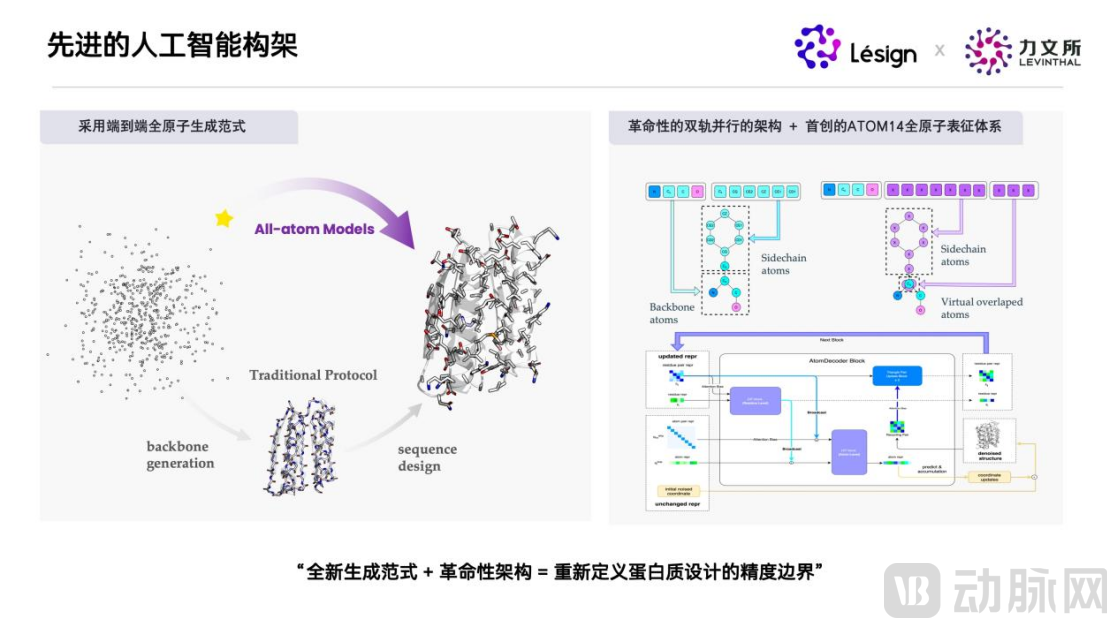
Figure 2. Schematic of the Pallatom model architecture, whose innovative all-atom design approach is akin to RFdiffusion developed by David Baker's lab (2024 Nobel Prize winner) and BoltzGen developed by MIT CSAIL.
Pallatom is a highly scalable all-atom diffusion model. Unlike traditional backbone-focused generative models, Pallatom initiates sampling from the complete all-atom structure, enabling the generation of proteins with more rational conformations and more accurate sequences. Its innovative atomic representation is designed to support the future design of ligand small molecules, DNA, RNA, and non-canonical amino acids, thereby fully unlocking a new paradigm for all-atom protein design.
In July of this year, at the International Conference on Machine Learning (ICML), a premier global conference in the field, Levinthal Biotech's paper titled "P(all-atom) Is Unlocking New Path For Protein Design" stood out among a vast number of global submissions and was presented as a Spotlight Poster. The study introduces a groundbreaking amino acid representation method that successfully bridges the gap between "sequence discreteness" and "coordinate continuity" in all-atom generative algorithms, elevating the success rate of protein design to atomic-level precision.
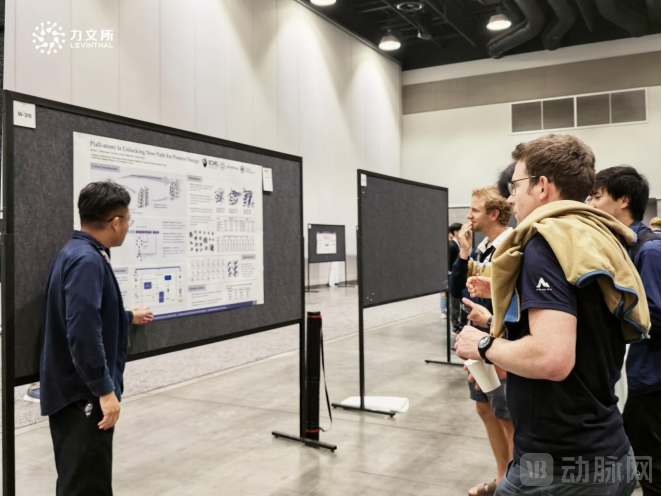
Figure 3. At the ICML2025 conference site, Wu Weikun, CIO of Pallatom (Levinthal), engaged in face-to-face exchanges with researchers from around the world during the presentation session.
On the commercial application front, Pallatom demonstrates immense commercial value. In biopharmaceuticals, it has successfully overcome a critical technical barrier in the core area of antibody purification. Through a precise "atomic-level surgery," it designed a Protein A alternative molecule that exhibits both industrial-grade alkali resistance and top-tier binding affinity. Its performance surpasses that of imported products, empowering Chinese biopharmaceutical companies to regain autonomy over their supply chains.
Furthermore, the platform is the first globally to solve the design challenge of mixed-chirality cyclic peptides, thereby unlocking broad potential for the development of next-generation cyclic peptide drug pipelines.
While Pallatom represents the technological pinnacle of Levinthal Biotech, the intelligent protein design platform Lésign® establishes the company's robust industrial foundation.
Lésign® innovatively integrates phylogenetic information and physical potential energy data into its AI co-evolution analysis model, effectively combining nature's evolutionary trial-and-error with the precise calibration of physical models. It is capable of introducing extensive mutations to generate diverse protein sequences, while also leveraging a general diffusion-based generative model to redesign and generate protein structures.
Built upon Lésign®, Levinthal Biotech deeply integrates protein large language models with co-evolution theory, innovatively deciphering the cooperative mutation relationships among amino acids. This significantly enhances the precision and success rate of protein sequence design. This core technology not only achieves a closed loop from algorithmic modeling to functional prediction but has also been scaled for application in the development of various functional proteins, including industrial enzymes and sweet proteins. It provides comprehensive solutions for enzyme stability design and high-yield heterologous expression.
Benefiting from the synergistic effects of its two core technology platforms, Levinthal Biotech has established a comprehensive end-to-end system spanning from molecular design to process development. Currently, the company has successfully launched and commercialized dozens of product pipelines, including the natural sweetener rebaudioside M, natural antifreeze proteins, and high-performance antibody tool enzymes such as IdeZ, IdeS, PNGase F, and sialidases. Its services cover a wide range of fields including synthetic biology, novel pharmaceuticals, health foods, animal nutrition, environmental protection, and functional skincare.
Furthermore, Levinthal Biotech provides external technical services such as protein sequence design, optimization, and engineering, assisting clients in building robust intellectual property barriers starting from the sequence level.